Kew Gardens
- Andreea
- Jan 3
- 3 min read
I have visited the Kew Gardens a few times but this Christmas I wanted to show it to my family too.
If you don't know, Kew Gardens dates back to the 18th century founded by the British Royal Family, as a botanic garden. Today, it's a UNESCO World Heritage Site.
For more information visit kew.org. On the website, you can also find information related to pricing and opening times.

We went there on a Christmas day, so a winter day which made the day and the visit shorter (the last entrance was at 14:30, closing at 15:15). We didn't visit the light trail since that happens after the sun sets.
We started at the Lion Gate with a walk towards the Pagoda (which was built by William Chambers in 1762) and we made a short stop at the Japanese Gateway. This time of the year the trees weren't in bloom but it was still nice to see the nature transforming.
We walked a bit around the main lake and quickly understood that the night was shortly coming so we moved to the Treetop Walkway. We went up by elevator at the treetop and had a nice view of the gardens.
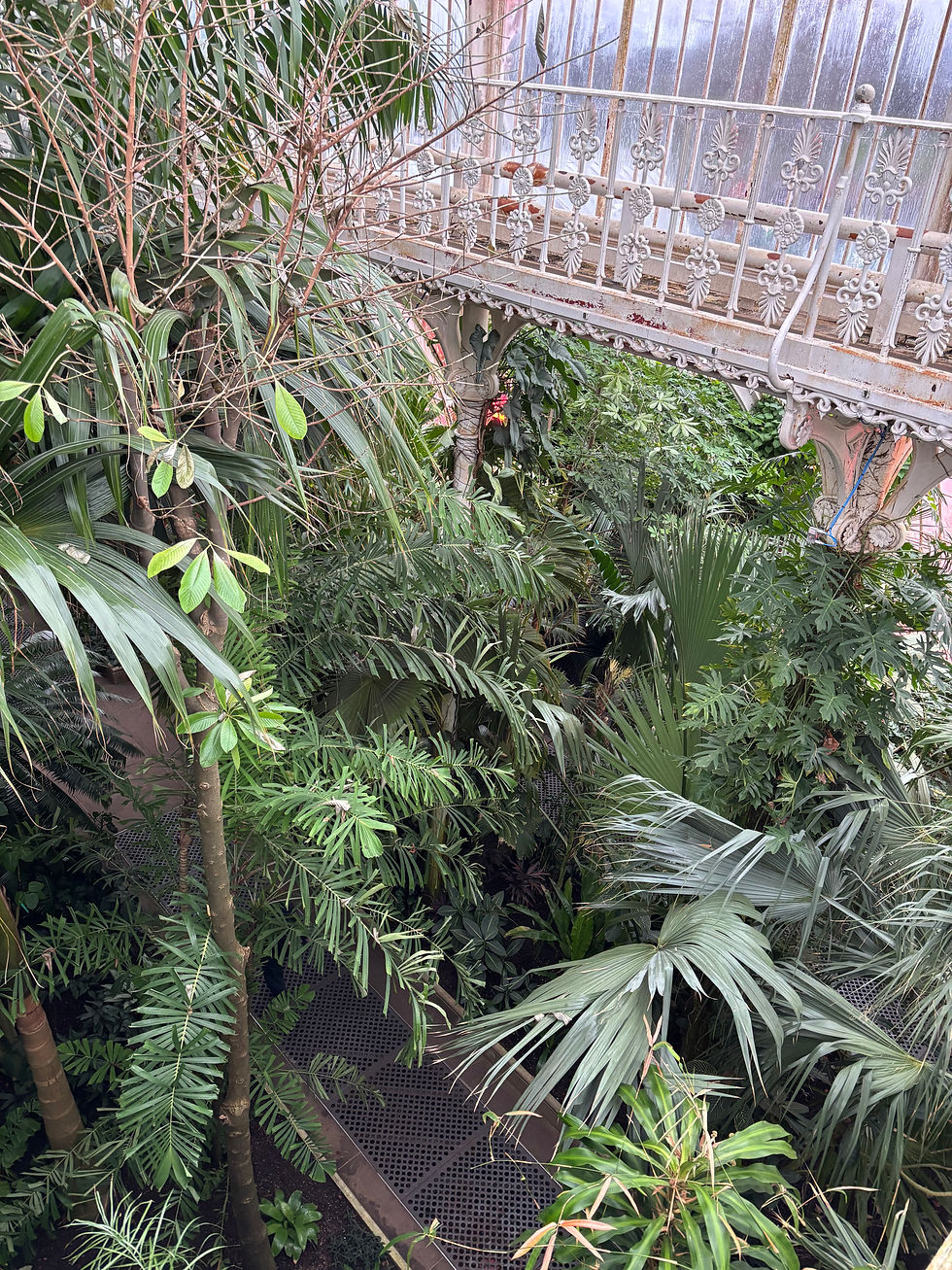
We decided it was time to check on the greenhouses which gather plants from around the world: Africa, America, Asia and so on. We managed to see some banana trees, coffee trees, rubber tree, Ficus plants (fig trees), carnivorous plants, cactuses, pineapple plants and so on. Of course, the plants are kept under their original environmental conditions so they can survive in England. The Palm House hosts most of the plants from warm and humid areas of the world.
There is also the Princess of Wales Conservatory which was recently refurbished and it holds mostly cactuses but also there is a dedicated section for the carnivorous plants.
Close to the Elisabeth Gate, you can see the school of horticulture and also the Herbarium & Library where you can find much more information related to the plants.
At the Orangery near the Elizabeth Gate, you can enjoy some food and drinks.
There is also a Gallery of Botanical Art as well as a few shops around the gardens where you can find souvenirs, soaps and hand creams made in the gardens, scarves, accessories, books, chocolates, games, drinks and many more.
There are scientists helping to preserve and protect the plants worldwide. (If you're interested, you can find a job or be a volunteer at the Kew Gardens - kew.org).
It was a nice day and a good experience to see nature this time of the year.
This walk reminded me of a book I read sometimes ago related to rubber, called "The Thief at the End of the World" by Joe Jackson. It describes the expedition of Henry Wickham in Brazil in the 19th century. He smuggles the rubber seeds from Brazil to England, to the Kew Gardens.
The book describes his adventures in Brazil looking for the seeds, falling ill, fighting the locals, building a house, getting married and getting divorced (his wife leaving him) all in the name of the rubber seeds to be brought to England. When he finally manages to come back to England, the Queen won't recognise his efforts to bring the seeds, but the seeds got to be planted at the Kew Gardens in the end. From here, the rubber is planted in all the warm and humid British colonies (like Singapore, etc) so it can be used in manufacturing goods the way we know today. (Sorry for giving too many spoilers but the book is an interesting read anyway.)
Hope you got to the end of the post, thanks for reading and if you need my help, feel free to contact me for more details.
Andreea


Comments